Updated on November 24, 2026
Researchers from The University of Hong Kong and ByteDance Seed have open-sourced Laminar, an Apache 2.0 asynchronous reinforcement learning (RL) post-training framework built specifically for long-horizon LLM coding and tool-use agents. Built atop verl for compute backends and Uni-Agent for sandboxed tool execution, Laminar breaks the synchronous lockstep barrier that leaves large GPU clusters sitting idle while waiting for straggler agent trajectories to finish.
Long-horizon RL post-training exhibits extreme rollout skew. In multi-turn software engineering tasks, most trajectories wrap up in a few tool calls while a stubborn long tail runs complex test suites across dozens of turns. Conventional synchronous frameworks stall every inference and training GPU until the slowest rollout completes. Earlier asynchronous alternatives tried interrupting mid-flight rollouts whenever new policy weights arrived, triggering expensive KV-cache invalidation and repeated re-prefill compute that grows cubically with sequence length.
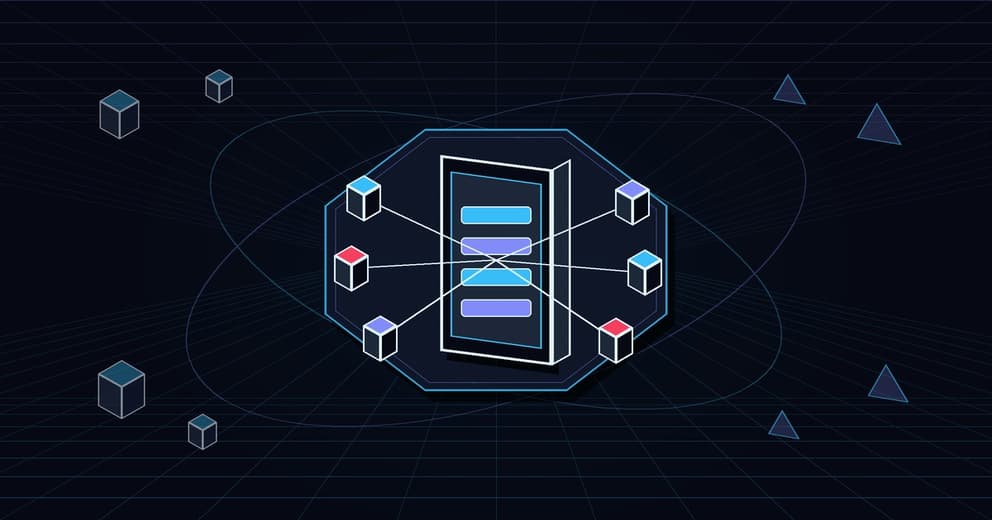
Laminar solves both bottlenecks by splitting RL post-training into four fully decoupled components: a Rollout loop running on vLLM replicas, an Experience Buffer data plane, an AsyncRLTrainer loop powered by Megatron-LM or FSDP2, and a distributed CPU Weight Relay plane. Instead of freezing all inference servers for a global weight broadcast, the trainer stages updated checkpoints into per-node shared CPU memory and resumes training immediately while rollout workers pull fresh weights over a pipelined RDMA chain on their own schedule.
In end-to-end software engineering agent runs post-training Qwen3-Coder-30B-A3B-Instruct on SWE-rebench, Laminar lifted SWE-bench Verified accuracy from a 46.6% base (233/500) to 52.2% (261/500). Across its 1,024-GPU EuroSys ’26 paper evaluation, Laminar delivered up to 5.48x higher training throughput than synchronous baselines while isolating single-node crashes so multi-day runs keep executing without full cluster restarts.
SWE-bench Verified Gains and Compute Savings : According to the official verl Laminar release post and the verl-project/laminar GitHub repository , Laminar trained Qwen3-Coder-30B-A3B-Instruct (30.5B total, 3.3B active parameters) on 64x H800 GPUs to 52.2% SWE-bench Verified using 51.2k samples and 1,843 GPU-hours, beating the 51.4% baseline peak (76.4k samples, 5,085 GPU-hours) with 33% fewer samples and 64% fewer GPU-hours.RDMA Weight Relay Speed : In the accompanying EuroSys ’26 Laminar paper , per-node CPU relay processes broadcast a 72B-parameter model across 127 rollout relays via pipelined RDMA in under 1.6 seconds without blocking the actor trainer.1,024-GPU Scaling Speedups : Tested across 7B, 32B, and 72B Qwen2.5 models up to 1,024 GPUs, Laminar achieved an average 2.56x speedup (up to 5.49x) over synchronous verl, 1.98x (up to 4.09x) over one-step staleness pipelines, 1.93x (up to 4.06x) over stream generation, and 1.39x (up to 1.81x) over AReaL, with maximum observed policy staleness capped at 4.Version-Consistent Rollout and Repack : Laminar lets every in-flight trajectory complete under a single policy version to preserve prefix KV caches, while a dynamic Repack scheduler consolidates lingering old-version trajectories onto a handful of dedicated replicas so drained GPUs swap to new weights immediately.Early Release Caveats : As highlighted by MarkTechPost’s technical review , the public repository launched with an initial commit supporting only vLLM for inference (per-step async checkpointing remains in progress), and the headline SWE-bench comparison contrasts Laminar on 64x H800 against a baseline run on 64x H100.
Comparing Laminar Against Synchronous and Version-Mixed RL Stacks
Post-training teams spending six figures monthly on RL compute should look closely at why version-consistent rollouts outperformed version-mixed partial rollouts on both sample efficiency and wall-clock GPU-hours in the verl benchmarks.
Training Configuration
Hardware Cluster
Trajectory Policy Mode
Trained Samples
Total GPU-Hours
SWE-bench Verified
Base Qwen3-Coder-30B-A3B N/A
Pre-RL baseline
0N/A
46.6% (233/500)
Baseline Peak (Step 150) 64x H100Version-mixed partial
76.4k5,08551.4% (257/500)
Laminar Match (Step 320) 64x H800Version-consistent
41.0k (-46%)1,450 (-71%)51.4% (257/500)
Laminar Peak (Step 400) 64x H800Version-consistent
51.2k (-33%)1,843 (-64%)52.2% (261/500)
Base Qwen3-Coder-30B-A3B
Hardware Cluster N/A
Trajectory Policy Mode Pre-RL baseline
Trained Samples 0
Total GPU-Hours N/A
SWE-bench Verified 46.6% (233/500)
Baseline Peak (Step 150)
Hardware Cluster 64x H100
Trajectory Policy Mode Version-mixed partial
Trained Samples 76.4k
Total GPU-Hours 5,085
SWE-bench Verified 51.4% (257/500)
Laminar Match (Step 320)
Hardware Cluster 64x H800
Trajectory Policy Mode Version-consistent
Trained Samples 41.0k (-46%)
Total GPU-Hours 1,450 (-71%)
SWE-bench Verified 51.4% (257/500)
Laminar Peak (Step 400)
Hardware Cluster 64x H800
Trajectory Policy Mode Version-consistent
Trained Samples 51.2k (-33%)
Total GPU-Hours 1,843 (-64%)
SWE-bench Verified 52.2% (261/500)
Even accounting for the hardware difference between H800 and H100 nodes (where H800 carries reduced interconnect bandwidth relative to H100, making Laminar’s GPU-hour advantage conservative rather than inflated), the sample-efficiency gain is unmistakable. Reaching 51.4% on SWE-bench Verified required 46% fewer trained samples (41.0k versus 76.4k) when trajectories stayed on a consistent policy version from first tool call to final patch submission. Mixing multiple policy versions inside one multi-turn debugging trajectory injects off-policy gradient noise and forces constant KV-cache recomputation whenever a weight sync fires mid-episode.
Dynamic Repack prevents version-consistent rollouts from reintroducing straggler waste. Once a new policy version lands in the Weight Relay, Laminar migrates or packs the few remaining long-tail trajectories onto dedicated tail replicas while freeing the majority of inference GPUs to begin generating trajectories under the latest weights. That architecture also changes cluster fault tolerance: if a sandbox worker or rollout GPU hangs during a flaky repository test, only that trajectory times out while the Experience Buffer and trainer keep running.
Evaluating Laminar’s Three-Layer Deployment Stack
ML infrastructure teams already running Ray and verl can map Laminar directly onto existing Slurm or Kubernetes GPU clusters using its decoupled three-plane configuration:
# Conceptual Laminar decoupled RL topology (verl + Uni-Agent + Weight Relay)
cluster:
orchestrator: ray
inference_backend: vllm
trainer_backend: fsdp2        # or megatron-lm for 70B+ dense / large MoE
rollout_mode: version_consistent
repack_enabled: true
max_policy_staleness: 4

planes:
data_plane: ExperienceBuffer  # buffers completed Uni-Agent trajectories
weight_plane:
 type: cpu_rdma_relay        # 1 CPU relay process per rollout node
 sync_interval_steps: 4
Before adopting Laminar for production post-training, engineers should inspect two operational gaps in the initial open-source drop: SGLang inference is not yet listed alongside vLLM, and per-step asynchronous checkpoint saving is still under active development. Teams running multi-week training runs should pair Laminar with periodic synchronous checkpoint barriers until full async checkpointing merges.
Benchmark Rollout Skew Before Switching Frameworks : Profile your current RL post-training step times to measure the ratio between median and p99 trajectory duration; if stragglers exceed 3x median runtime, decoupled version-consistent rollouts will yield immediate GPU-hour savings.Test Laminar’s SWE-rebench Recipe on a Small Ray Slice : Clone verl-project/laminar on an 8-GPU or 16-GPU Ray cluster with vLLM and FSDP2 to validate RDMA Weight Relay throughput and Repack migration behavior on your own tool sandboxes.Add Explicit Checkpoint Safety Guards : Until per-step async checkpointing ships in the public repo, configure scheduled synchronous checkpoint flushes every 25 to 50 trainer steps to protect long-horizon runs against coordinator failure.
Beat:
Topics:
# bytedance-seed
# open-source
# reinforcement-learning
# swe-bench
# verl